ServicesDock Levelers
Dock Leveler Repair and Service in Tamaqua
A leveler that sticks, drifts or bounces slows every trailer and puts your crew at risk. We inspect the deck, lip, hinges and drive system first, show you what we found, and then explain what the repair involves and why.
What we do on a dock leveler
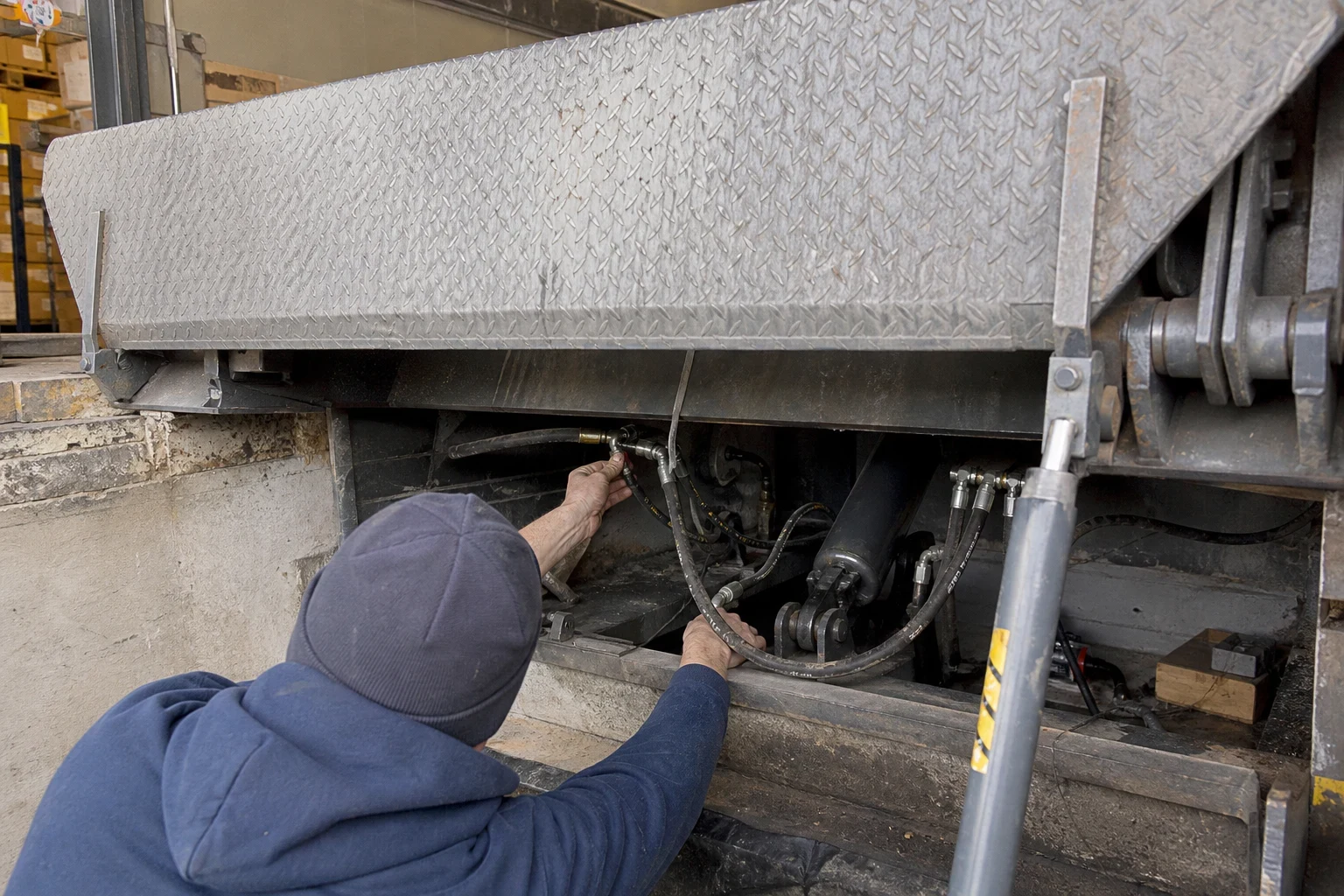
A dock leveler bridges the gap and height difference between your dock floor and a trailer bed. It takes repeated forklift impact all day, so wear shows up in predictable places: lip hinge pins, rear hinges, hydraulic seals, springs and the welds that hold it all together. We repair hydraulic, air-powered and mechanical pit levelers, along with edge-of-dock units.
Every job starts with a close look, not a parts list. We raise the deck, set the maintenance strut, and check the structure and drive system piece by piece. You get plain findings, including what can wait and what needs attention now, before we recommend anything.
What a leveler repair can cover
- 01
Hydraulic power unit and cylinders
We check the pump, motor, fluid level and condition, hoses, fittings and cylinder seals. A leaking lift cylinder or a failed velocity fuse changes how the deck behaves under load, so we trace the cause, not just the symptom.
- 02
Lip hinge and lip pins
The lip hinge takes the hardest hits on the whole leveler. Worn or seized pins keep the lip from extending fully or folding back down. We clean, replace or re-pin the hinge and check the lip plate for cracks.
- 03
Mechanical springs and hold-downs
On mechanical levelers, the lift spring, hold-down ratchet and release chain do the work. Weak springs make the deck slow to rise, and a worn hold-down lets it float. We adjust or replace them to the right tension.
- 04
Air bag levelers
For air-powered units we check the bag, blower and support legs, and look for punctures or a blower that no longer builds enough pressure.
- 05
Deck, welds and frame
We look for cracked welds at the rear hinge, bent deck plate, and broken beams under the deck. Structural damage is the one item that can decide repair versus replacement.
- 06
Toe guards and weatherseals
Toe guards protect feet when the deck is raised, and perimeter seals keep drafts and debris out of the pit. We replace damaged ones so the dock stays safe and tight.
Questions about Dock Levelers?
Call(570) 565-0322Signs your dock leveler needs service
The lip won't fully extend
A lip that hangs partway out usually points to seized hinge pins, a weak lip cylinder or debris packed in the hinge. It leaves a short landing on the trailer bed, which is a real hazard under a loaded forklift.
The deck drifts down or drops
Slow sinking often means internal cylinder leakage or a failing check valve. A sudden drop is more serious and means the leveler should be taken out of use until a tech has looked at it.
Oil in the pit
Fluid under the deck means a hose, fitting or seal is leaking. Left alone it lowers fluid levels and lets air into the system.
Bouncing, banging or loud clunks
Excess noise when forklifts cross usually means worn hinges, loose support legs or cracked welds. Each impact makes the damage spread.
Slow or sluggish raising
Hydraulic fluid thickens in cold weather, which makes a tired pump or contaminated fluid more obvious in a Pennsylvania winter. Mechanical units slow down when springs lose tension.
How a leveler service visit runs
- 1
Talk through the problem by phone
Tell us what the leveler is doing, which door it is, and when your dock is least busy. We schedule a visit around your receiving and shipping times to keep downtime low.
- 2
Lock out and inspect
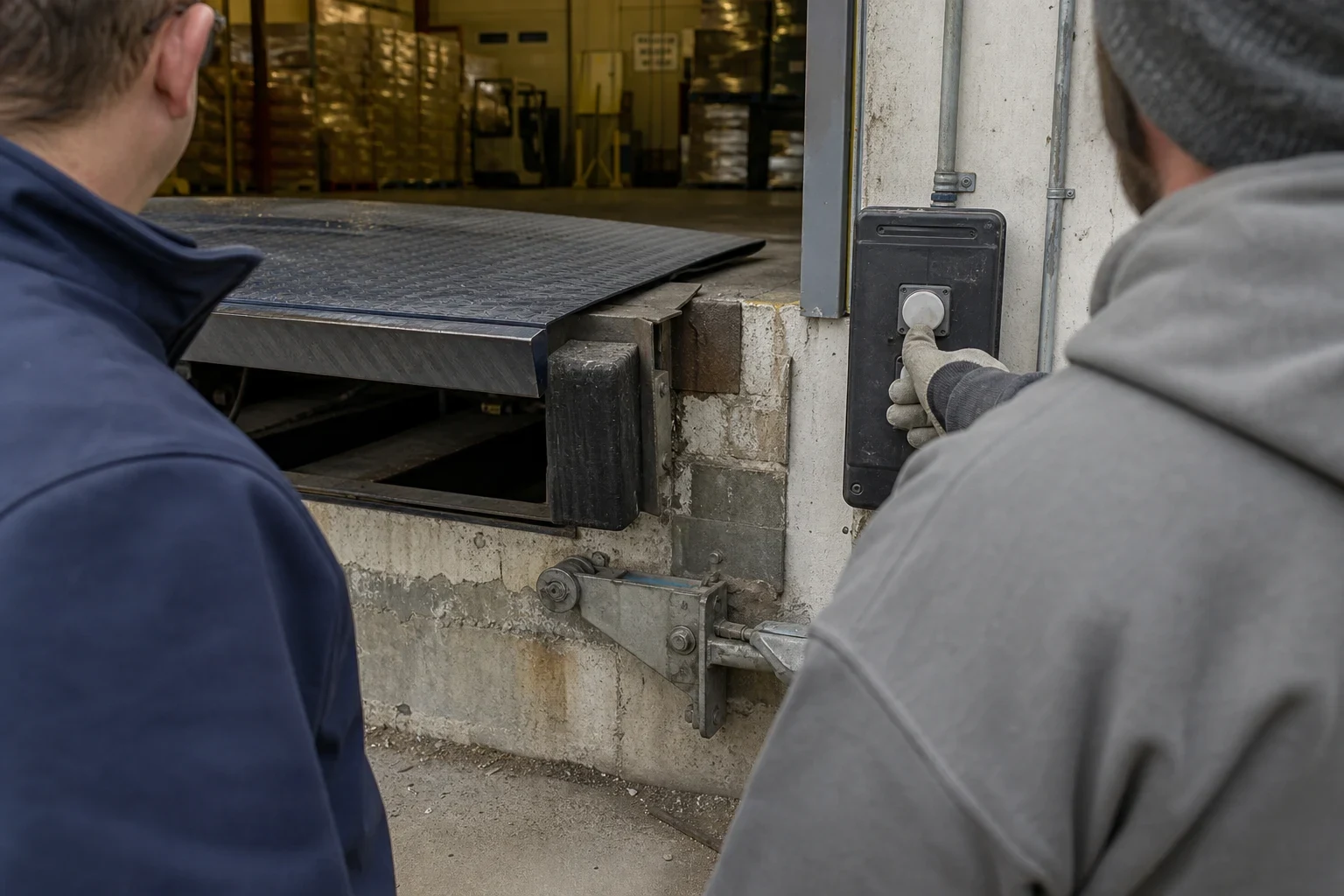
We lock out power, raise the deck and set the maintenance strut before anyone works underneath. Then we check the drive system, hinges, lip, welds and safety devices, and take photos of what we find.
- 3
Plain findings and a quote
We show you the photos and explain each problem, its cause and what happens if it waits. You get a line-item quote so you can decide what to fix now.
- 4
Repair and test
Our techs are forklift and scissor lift training certified, which matters when a repair means moving heavy deck components or working at height inside the dock. After the repair we cycle the leveler through its full range, check lip extension and confirm the deck holds.
What moves the cost of a leveler repair
No two leveler repairs are priced the same, because the cause behind a symptom varies. A drifting deck might be a fitting or a cylinder. We quote after the inspection, so the number reflects what is actually broken.
- Type of leveler
- Hydraulic, air-powered and mechanical levelers use different parts, and the drive system on each one wears differently.
- Component versus structural damage
- Replacing pins, seals or a spring is a straightforward job. Cracked deck welds or broken support beams take more time and welding work.
- Parts availability
- Common parts for most makes are easy to source. Older or discontinued units can need fabricated parts, which adds lead time.
- Pit and curb condition
- If the curb angle or pit floor is damaged, the leveler may not sit or move correctly until that is addressed too.
- Scheduling around your operation
- Work during off-shift hours or splitting a job across several visits to keep doors open can change the labor involved.
Dock leveler questions
Should I repair my dock leveler or replace it?
Most levelers can be repaired when the problem is in the hinges, seals, springs or power unit. Replacement makes sense when the deck frame is cracked through, the unit is badly bent, or parts are no longer available. We tell you which case you are in and show you the evidence.
Can the rest of our dock stay open while you work?
Usually, yes. We isolate the door we are working on, lock out its leveler and keep our equipment clear of the active doors. For larger jobs we can plan the work around your slower hours.
Is there a warranty on leveler repairs?
Yes. Our repair work comes with a 1-year labor warranty. We will explain what the work covered when the job is finished.
How often should a dock leveler be serviced?
Busy docks benefit from regular checks of hinges, fluid and safety devices so small wear is caught before it becomes a failure. Our Loading Dock Preventative Maintenance page explains how scheduled service works.
Do you work on vehicle restraints at the same time?
We can. A leveler and a vehicle restraint work together at the same door, so it often makes sense to look at both during one visit. See our Vehicle Restraints page for details.
Get a clear answer on your leveler
Tell us which leveler is giving you trouble and what it is doing. We will set up an inspection and walk you through the findings before any repair begins.