ServicesPreventative Maintenance
Loading Dock Preventative Maintenance in Tamaqua
We go over every dock position the same way: leveler, door, restraint, seal and bumpers. Then you get plain findings, sorted into what needs work now, what to watch and what is fine. Small wear gets fixed before it turns into a dead door during a shift.
What preventative maintenance actually covers
Loading dock equipment wears in predictable places. Lip hinge pins dry out and seize. Hydraulic cylinder seals weep. Overhead door torsion springs lose tension cycle by cycle until one snaps. A preventative maintenance visit finds that wear while it is still a lube, an adjustment or a cheap part.
We start every visit with the inspection and write down what we see before we recommend anything. If a leveler only needs its hold-down adjusted, the report says that. If a door spring is near the end of its rated cycles, we tell you that too, show you a photo and let you decide when to schedule the work.
For warehouses, distribution centers and grocery receiving docks from Tamaqua to Hazleton and Lehighton, that means fewer surprises, cleaner safety records and downtime you plan instead of downtime that plans you.
What we check at each dock position
- Dock leveler structure and lip
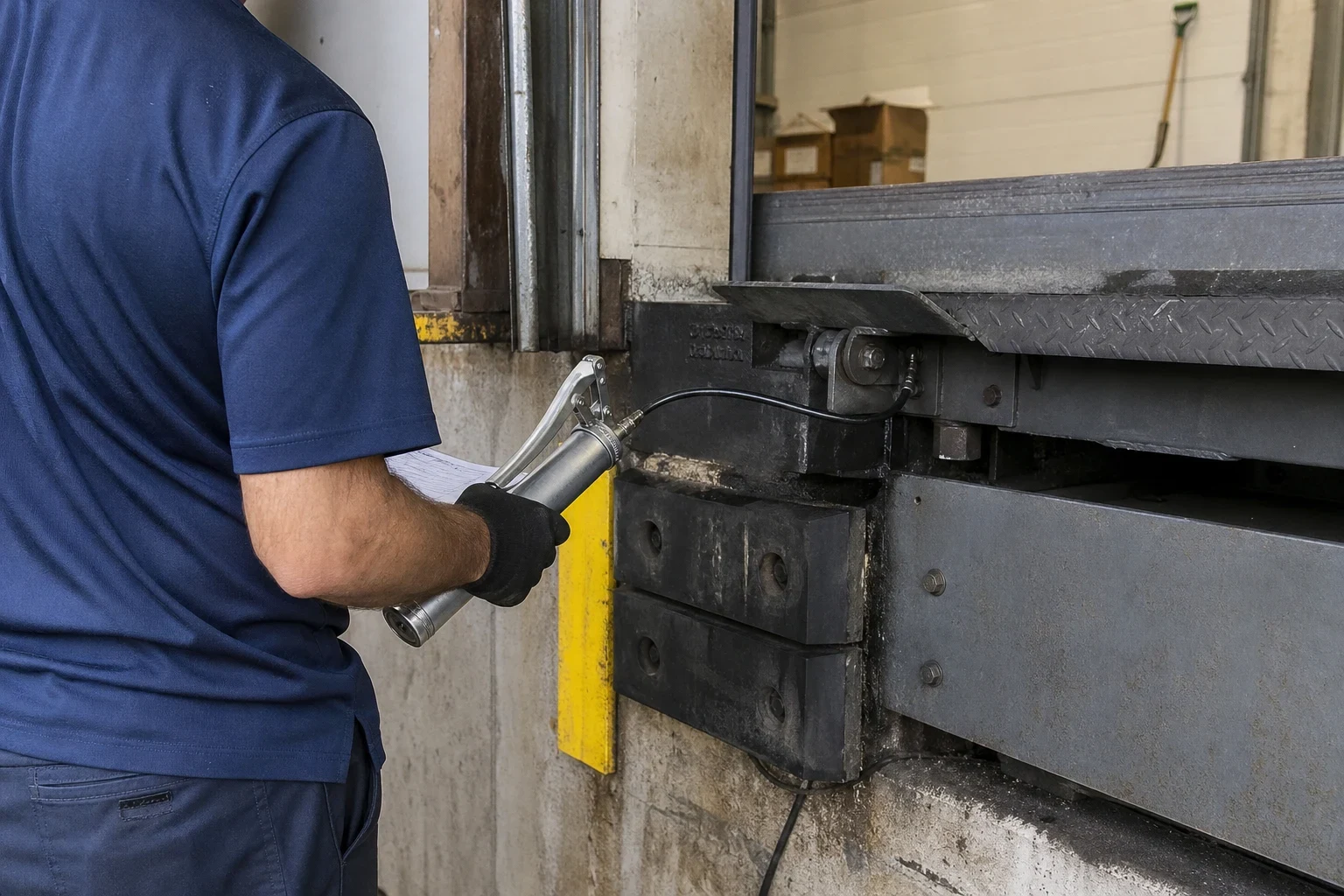
- We put the leveler on its maintenance strut, then check the lip hinge, hinge pins, deck plate welds and toe guards. On mechanical units we look at the springs, hold-down and lip extension linkage. On hydraulic units we check fluid level, hoses, cylinder seals and the velocity fuse that stops a free fall.
- Overhead door hardware
- Torsion springs, lift cables, drums, rollers, hinges and track alignment. We test balance with the door disconnected from the operator, because an out-of-balance door strains the motor and the cables.
- Vehicle restraint function
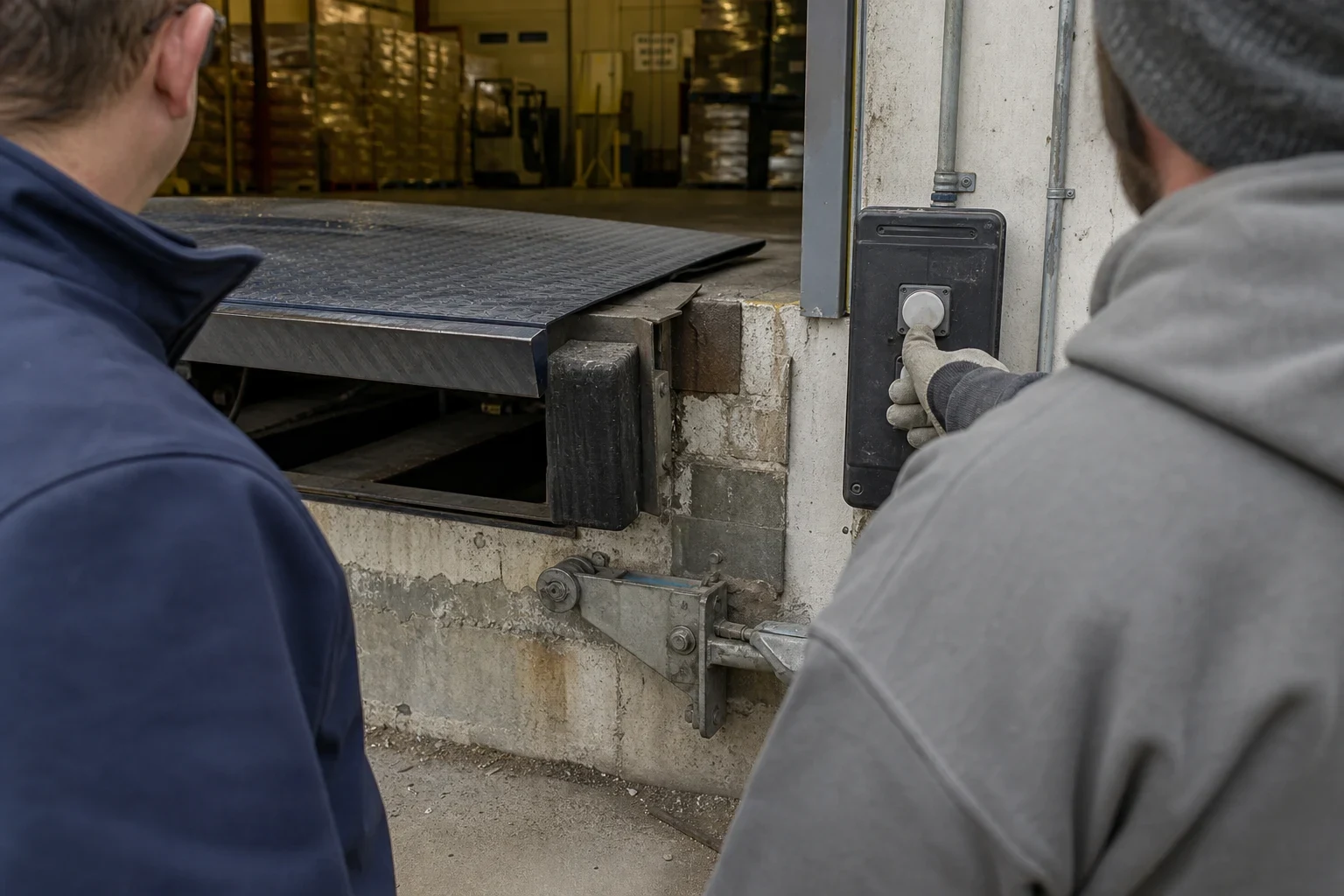
- We confirm the hook or barrier engages a trailer's rear impact guard and that the inside and outside light signals change when they should. A restraint that reads locked but is not engaged is worse than no restraint.
- Seals, shelters and bumpers
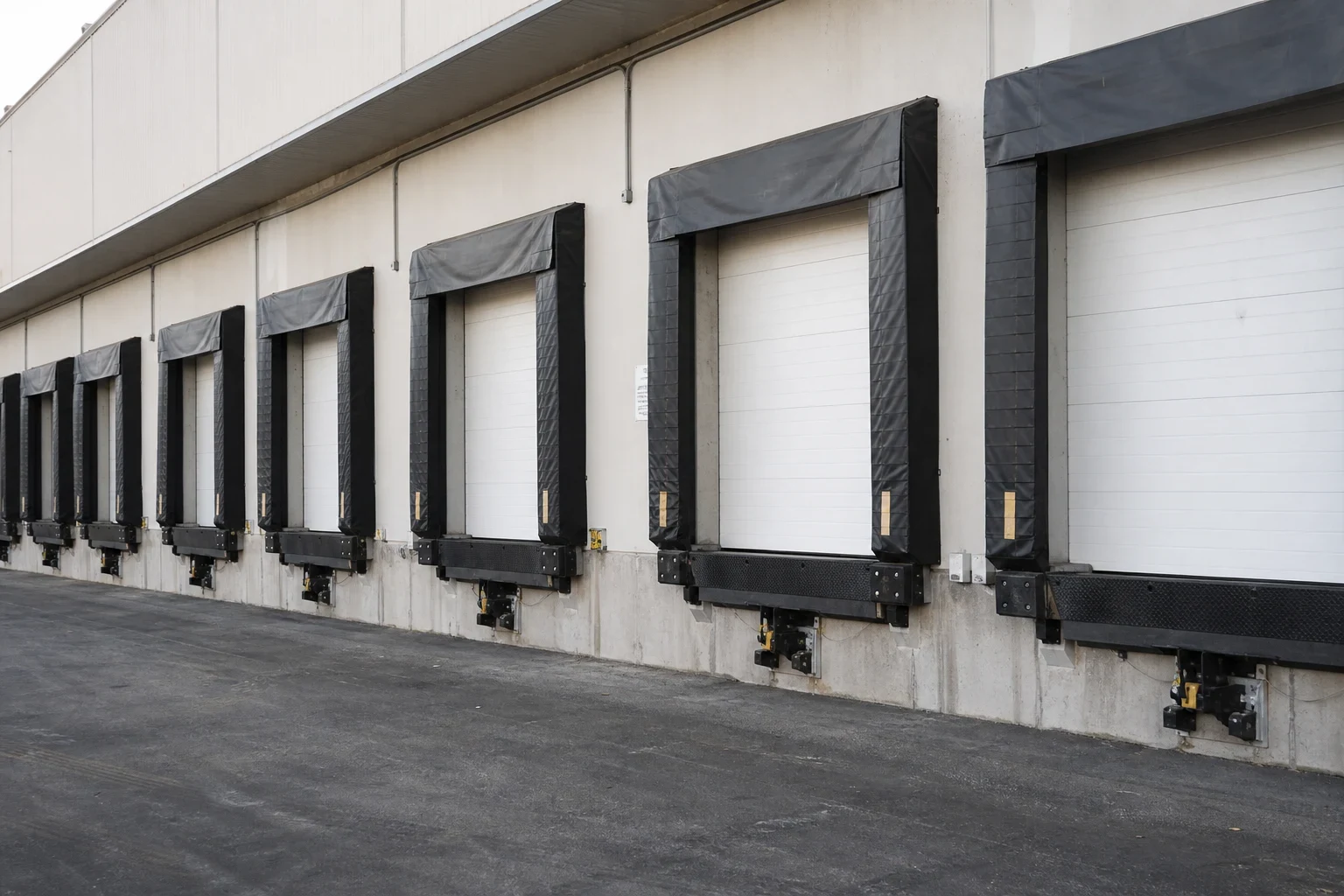
- Torn dock seals let heat and weather in. Worn rubber bumpers let trailers strike the building and the leveler frame, which cracks welds over time.
- Lubrication and adjustment
- Pivot points, hinges, rollers and bearings get greased or oiled to the manufacturer's guidance, and limits and tensions are set back where they belong.
Signs your docks are overdue
The leveler drops hard or stalls
A deck that slams down or will not rise fully usually points to low hydraulic fluid, weak springs or a worn hold-down. It gets worse with every cycle.
The lip will not extend or fold
A seized lip hinge leaves the lip hanging short of the trailer bed. Forklift wheels then hit the gap, which hurts the equipment and the operator.
Doors that grind, jerk or reverse
Flat-spotted rollers, frayed cables and bent track sections show up as noise before they show up as a door that will not open.
Restraint lights that disagree
If the driver sees green while the hook is not on the bar, the safety system has stopped telling the truth. That needs attention right away.
Daylight around a docked trailer
Gaps in the seal or shelter mean energy loss, and in winter, snow and road salt blowing onto the leveler pit.
How a maintenance visit runs
- 1
A call to plan it
You tell us how many dock positions you have, what equipment is on them and when your receiving schedule is lightest. We plan the visit around your shifts so docks come out of service one or two at a time.
- 2
Lockout and inspection
Each position is locked out and tagged before we touch it. Our technicians are forklift and scissor lift training certified, so we can safely reach header-mounted door hardware and spring assemblies.
- 3
Service as we go
Lubrication, adjustment and minor fixes we can make on the spot get done while we work through each position, then each one is cycle-tested before it goes back into use.
- 4
Written findings
You get a position-by-position report with photos. Items are marked as done, needs repair now, or watch at the next visit, with a plain reason for each.
What sets the price of scheduled dock service
We price a maintenance program from the equipment you actually run, not from a fixed bundle. Once we know what is on your docks, you get the figure by phone or after an initial walk-through. Any repair we spot during a visit gets its own quote, and the call is yours.
- How many positions you run
- A single position usually means a leveler and a door, often with a restraint and a seal as well. The more positions you have, the longer we spend on site.
- What the equipment is and how old
- A hydraulic leveler, a high speed door or a powered restraint has more parts to go over than a mechanical leveler paired with a manual door. Older units also tend to need more adjusting.
- How often we come out
- A busy distribution dock may call for a visit every quarter. A manufacturing dock with lighter traffic can often get by with two visits a year.
- What shape things are in
- When seals, rollers, cables or bumpers are too worn to adjust, the replacement parts raise the cost. We show you what we found before ordering anything.
Preventative maintenance questions
Something not covered here? (570) 565-0322
How often should our dock equipment be serviced?
It depends on cycles and conditions. Busy docks running multiple shifts usually need quarterly service, and lighter docks can often go every six months. After the first visit we recommend an interval based on the wear we actually see.
Do you service equipment someone else installed?
Yes. Levelers, overhead doors and restraints all follow the same mechanical principles, and we judge each unit on its own condition. If a part is hard to source, we say so in the report.
Will our docks be down all day?
No. We work one or two positions at a time while the rest stay in use. Most positions return to service as soon as their checks and cycle test are done.
What happens if you find something that needs repair?
It goes in the written findings with a photo and a plain explanation of why it matters. Small items may be fixed during the visit. Larger dock leveler, overhead door or vehicle restraint repairs are quoted so you can schedule them.
Is the work covered?
Our labor carries a 1-year warranty. If you have a concern about work we did within that year, give us a call and we will come back out to look at it. Ask when you schedule if you want to know how it applies to a specific repair.
Get your docks on a maintenance schedule
Tell us how many positions you run and what is on them. We will plan a visit around your receiving hours and walk you through what we find.