ServicesEquipment Sales
Loading Dock Equipment Sales in Tamaqua
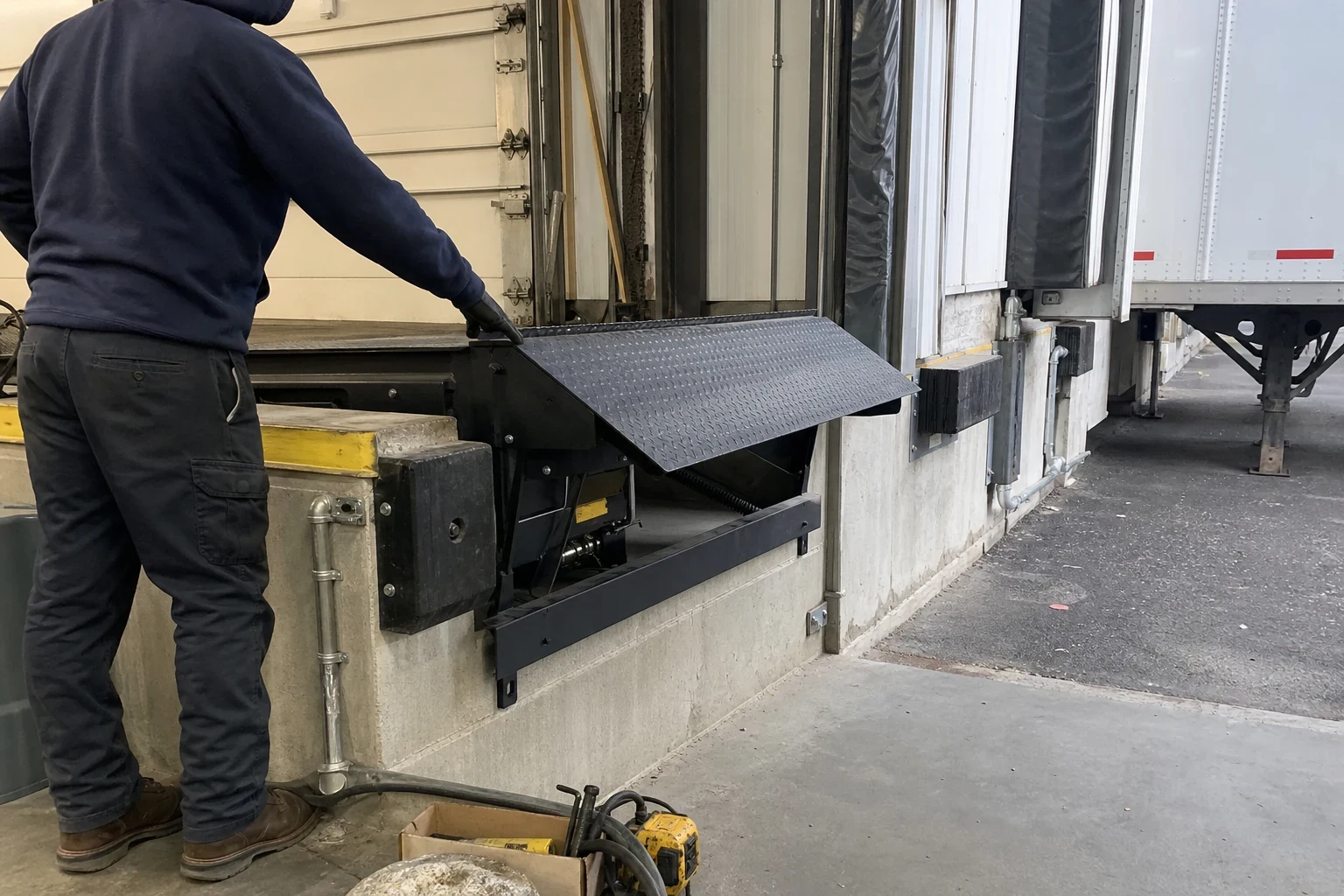
We sell dock levelers, vehicle restraints, dock seals, bumpers and doors, but only after we look at your dock. We measure the pit, check the concrete and note the trailers you receive, then tell you plainly what fits and what your current equipment still has left in it.
Buying Dock Equipment Starts With Measuring the Dock
Most bad dock purchases come from a catalog number chosen without a tape measure. A leveler with too short a lip can't reach low-bed trailers. One rated below your heaviest loaded forklift fatigues its hinge and deck welds early. A restraint that hooks the rear impact guard does little for trailers with bent or missing guards. We avoid that by inspecting before we quote.
On the visit we record dock height, pit width, depth and length, the condition of the curb angles and pit floor, available power, and the range of trailer bed heights you see in a normal week. You get written findings first. If a worn part can be replaced instead of the whole unit, we say so.
Then we put together equipment options with the reasons behind each one. When you're ready, our loading dock equipment installation crew can set what you buy, so one team owns the result from measurement to start-up.
What We Supply
- 01
Dock levelers
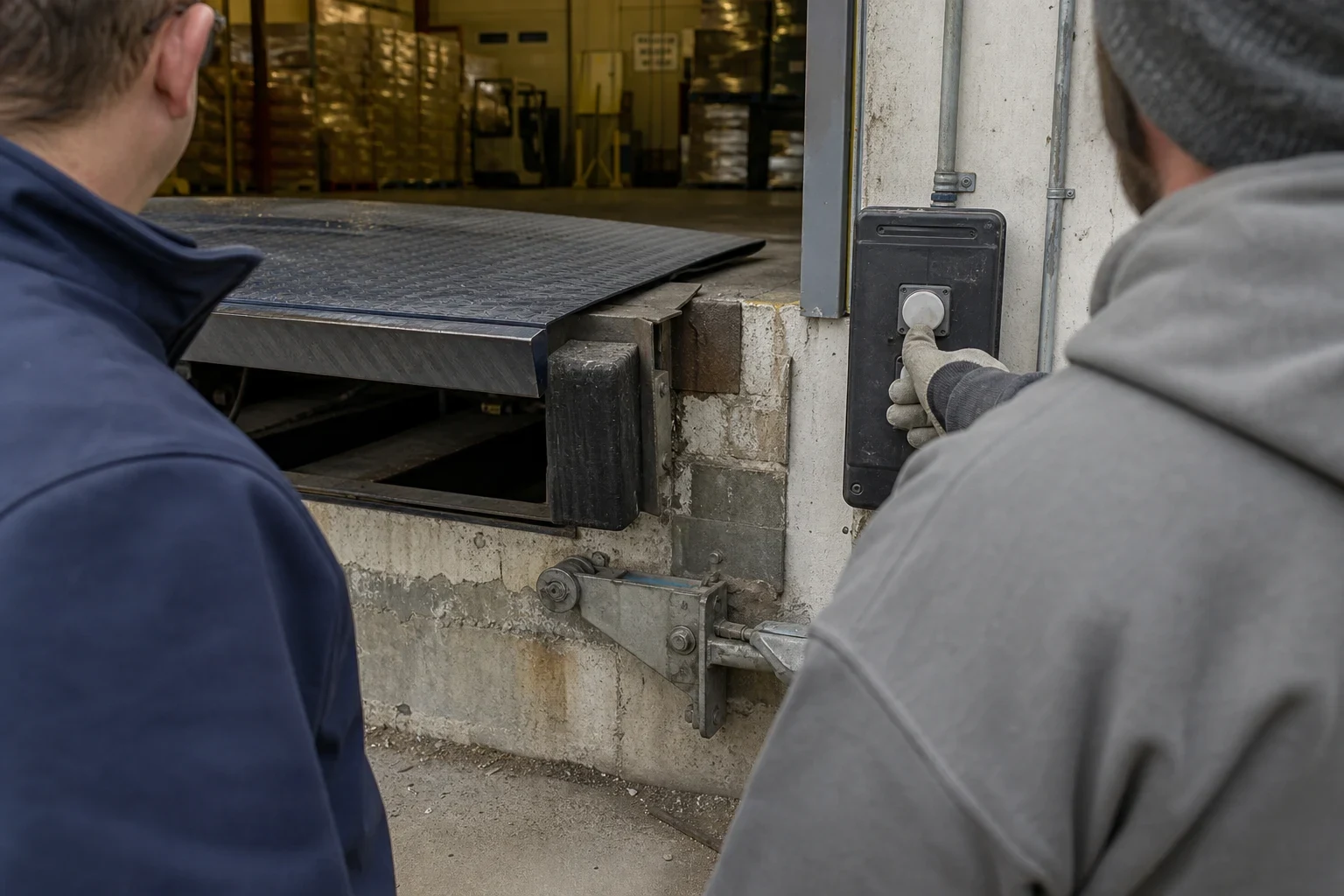
Hydraulic, mechanical and air-powered pit levelers, plus edge-of-dock units for docks with little height difference. We match capacity rating, deck length and lip length to your forklifts and trailer heights.
- 02
Vehicle restraints
Some restraints catch the impact guard, the ICC bar under the trailer's rear. Others lock against a rear tire, which suits fleets whose guards are bent, missing or nonstandard. Either type can be paired with inside and outside signal lights so drivers and forklift operators read the same status.
- 03
Dock seals and shelters
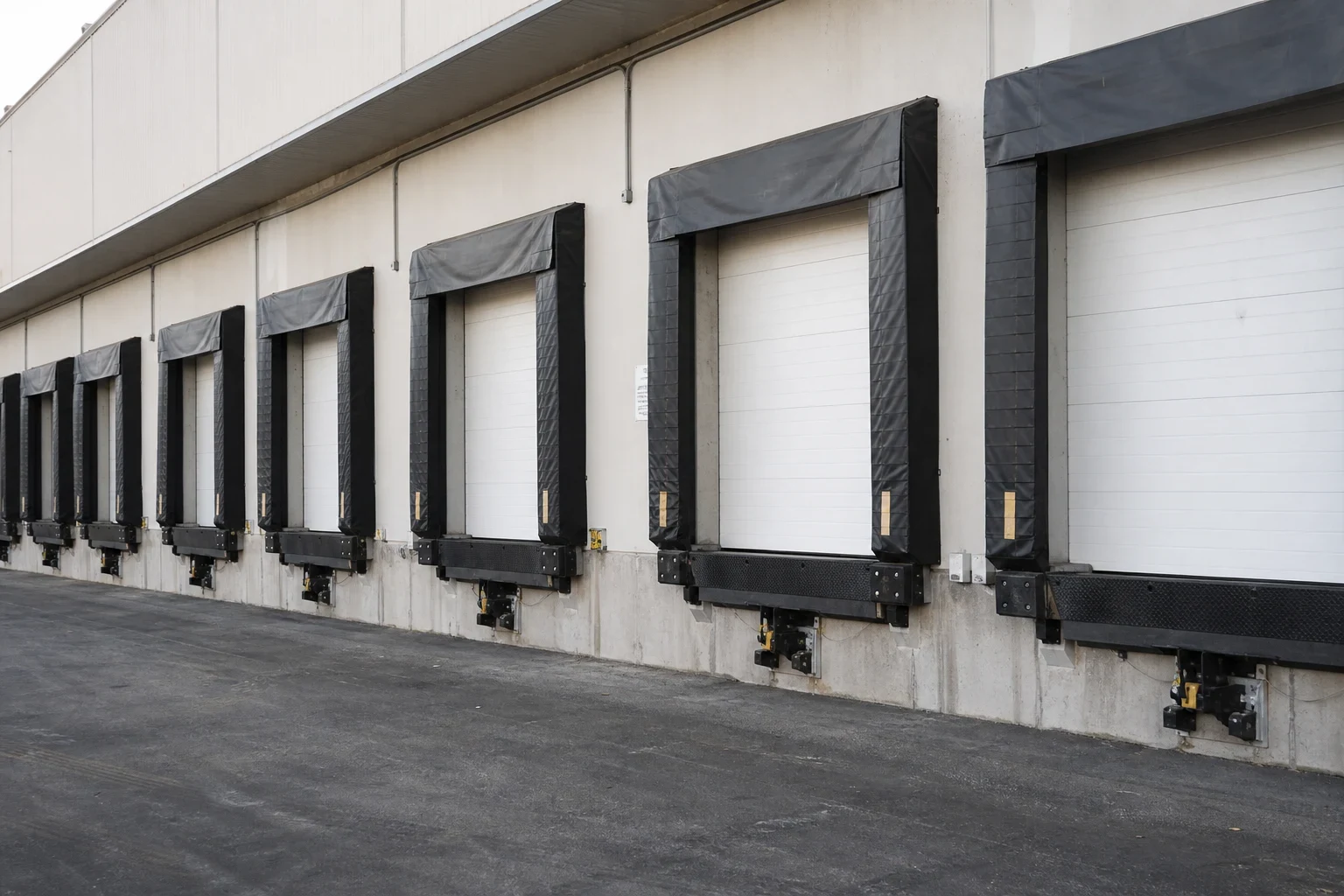
Foam-pad seals for docks that serve a consistent trailer size, and shelters where trailer widths and heights vary. A good fit cuts drafts, keeps rain and snow off the dock plate and protects refrigerated product.
- 04
Bumpers and dock accessories
Laminated and molded rubber bumpers, steel-faced bumpers for high-impact docks, wheel chocks, dock lights and trailer guide-ons.
- 05
Doors for the dock opening
Insulated sectional overhead doors, high speed doors and rolling grilles, sized to the opening and to how many cycles a day it sees. See our Overhead Doors, High Speed Doors and Rolling Grilles pages for detail.
Questions about Equipment Sales?
Call(570) 565-0322Signs It's Time to Price New Equipment
The leveler keeps coming back for the same repair
Repeated hydraulic cylinder leaks, cracked lip hinges or a deck that won't hold level often point to a unit undersized for today's loads. At some point repair costs pass the value of the leveler.
Your trailers changed but the dock didn't
Air-ride suspensions, low-profile trailers and taller reefers all shift bed heights. If forklifts are bottoming out on the transition, the lip length or leveler range no longer fits.
Trailers creep away from the dock
Trailer creep and early departures are serious safety risks. Wheel chocks that get skipped are a sign a vehicle restraint belongs on the list.
Cold air and water get in around the trailer
Torn seal fabric, flattened foam pads or missing head curtains let weather onto the dock plate. In a Schuylkill County winter that means ice on the leveler and higher heating costs.
Bumpers are worn to the bolts
Once rubber is gone, trailers strike the dock face and leveler front header directly, cracking concrete and bending steel.
The Steps From Visit to Start-Up
- 1
A visit to your dock
At your facility we measure every dock position and look over the current equipment, the pit and the wiring. We also ask how heavy your forklifts are, which trailers you see and how much moves through each day.
- 2
What we found, in writing
For each door you get a plain rundown, with photos, of what is still working, what is worn and what no longer suits the way you operate.
- 3
Choices that fit
We set out the equipment that suits your dock, listing the capacity, size and power each one needs, and explain the trade-offs, like choosing hydraulic or mechanical operation.
- 4
Placing the order and setting dates
After you decide, we order the equipment and time the install to your receiving schedule, so the rest of your doors stay open while one is out.
- 5
Delivery and getting it running
Moving a leveler deck or hanging a door takes skill, and our crew is forklift and scissor lift training certified. We test each unit and show your staff how to run it.
What Moves the Price of Dock Equipment
Two docks that look alike can price very differently once the pit and power are measured. We itemize the equipment, any pit or electrical work and installation separately so you can see where the money goes.
- Unit type and rated capacity
- A hydraulic leveler carries a higher price than a spring-operated mechanical unit, and each step up in capacity or deck length means heavier steel. Restraints that lock the wheel usually run above models that catch the impact guard.
- Pit condition
- A replacement leveler that drops into an existing square pit is simplest. Cracked curb angles, spalled concrete or a pit sized for an older unit adds concrete work.
- Power and controls
- Hydraulic levelers, restraints and powered doors need proper electrical supply. Interlocking a restraint, leveler and door so they operate in sequence adds wiring and controls.
- Number of positions
- Ordering for several doors at once spreads delivery and setup across the job, and keeps equipment consistent for your operators.
Questions About Buying Dock Equipment
Will you tell me if I don't need new equipment?
Yes. The inspection comes first, and if a leveler only needs a new lip hinge pin or hydraulic hose, that is what our findings will say. Many buyers end up mixing a few new units with repairs and loading dock preventative maintenance on the rest.
Do you install the equipment you sell?
Yes. Our own crew handles delivery, setting and start-up, so the people who measured your dock are the ones who put the unit in. Installation work we do carries a 1-year labor warranty.
Should I choose a hydraulic or mechanical dock leveler?
Mechanical levelers use springs and a pull chain, cost less and don't need power, but they take more upkeep and operator effort. Hydraulic units run on a push button, handle heavy and frequent loads better and have fewer wear points in the spring assembly. Your traffic and forklift weights usually decide it.
Which vehicle restraint fits our trailers?
Hook restraints work well when most trailers have intact rear impact guards. If you see many damaged guards, liftgates or specialty trailers, a wheel-based restraint holds the tire instead. We look at your actual trailer mix before recommending either; our Vehicle Restraints page has more detail.
Can you replace equipment without shutting down our dock?
We work one position at a time so the other doors stay in service. Most single leveler swaps into a sound pit are finished within a day.
Get the Right Equipment for Your Dock
Tell us how many doors you run and what's giving you trouble. We'll set up an inspection at your facility in Tamaqua or a nearby town and give you written findings before any recommendation.